After spending nearly a week in Mandalay, we decided that Myanmar New Years was not going to stop us from moving on to the next destination of our trip. There were no busses running due to the 6 day holiday, and the flights were too expensive for our budget, so we decided to take the train.
The trains in Myanmar are old. The ride is known to be bumpy and a bit rough. We knew the ride would be uncomfortable but didn’t quite think through what this meant.
We cautiously walked through the streets of Mandalay from our hotel to the train station trying not to get splashed with water (it was still the last day of the water festival) and we made it to the station after only getting water carefully poured on the fronts of our bodies once. We were wearing our backpacks and despite careful packing, we did not want them to get soaked because we wouldn’t be able to dry them out for awhile, so the one person who wanted to pour water on us made sure to do so tenderly. We got to the station about an hour before the 3pm train was set to leave, and we tried to buy a ticket, but found out there was only going to be a 5pm train that day. Ok, we can deal with that I suppose, just chill out at the train station for awhile. We also discovered that there were no first class seats left, only “ordinary class”. Ok, I guess that is what we are going to have to do, since we are at the train station already, and have had enough of Mandalay. So we paid our 2000 kyat ($1.70) for our two tickets to Thazi, the town we would need to switch trains in, and tried to find somewhere to relax in the station.
The thing about Myanmar is that many of the public transportation venues (and the transportation itself) are just not made to be comfortable. There is certainly no air con or cushioned seats. We were lucky to find a bench to sit on, and at least we were in the shade, but it was still pretty dang hot in the station. The locals tend to just bring their own grass mats to sit/lay/sleep on, and we were tempted to buy one but convinced ourselves that we didn’t need one since there were benches, and would we really use the mat again on our trip? Eventually it got close enough to our departure time that we went and found our seats on the train. They were hard plastic seats, with a window that did not close. Which was fine enough, since it was so hot we needed flowing air anyways.
Surprisingly enough, the train left almost exactly on time. During our wait in the train station, we nearly forgot it was the last day of the water festival – but the locals outside certainly did not forget, and it seems they line up to throw water at people on the train whenever it comes by (which is not all that frequently). Hoses were sprayed into the train, and splashes came from both sides. The water throwing slowed down once we got out of the city, and at one point Thom and I were looking at one of our train neighbors who was playing with her baby, when suddenly a giant bucket was thrown into the (somewhat) swiftly moving train directly into my face. It knocked my glasses off and stung like hell for a minute, after which I realized I was completely soaked by the water festivities yet again. Luckily it was the last day of the festival, as it was getting pretty annoying to have water of questionable clarity thrown at us from any possible angle.
We settled into the ride as much as we could, but, as another traveler put it, the train is like riding in a washing machine. It randomly rocks from side to side pretty violently, then has an up and down bounce that maybe tries to compensate for the side to side shaking, and each little bump is felt quite harshly on our backsides. There cannot possibly be any suspension on the train. Occasionally we felt like the swaying decreased, but whether it is because it smoothed out for a few minutes or because we tuned it out is up for debate.
We made it through the four hour ride to Thazi (although it was supposed to be 2.5 hours..) with some nice distracting conversation with our neighbors: a couple, a mom, a baby, and a 10 year old monk. They seemed to be on their way home from the child monk’s initiation into monkhood. The child monk showed us a bunch of pictures of his initiation, which included a small parade in traditional garb on a pony with the other boys becoming monks, and the ceremonial shaving of his hair. He practiced his English with us as much as possible (My mother is thirty eight years old. My father is police.) at his mother’s encouragement, and hung out with us for awhile, trying to name things in English that we passed by on the train (fire, tree, pagoda, house).
Once we arrived in Thazi, we said goodbye to the child monk and his mother, and his aunt and uncle proceeded to lead us to the hotel we were going to spend the night at, Wonderful guesthouse, one of two hotels in Thazi. It was a reasonable place to spend the night before our next train, though after talking with the owner, she was not sure if the 7am train would be running on New Years, and advised us to take the 5am train as that one always runs. Of course this was not ideal after having arrived in Thazi after 8pm and we hadn’t even eaten dinner yet, but we did not want to miss this train so we had to do it. We tried to find dinner and quickly found out everything was closed for the night, so we got some ramen that the guesthouse owner cooked for us, and tried to get some rest.
The next morning we got to the station bright and early, got our tickets, and settled in for another ride. This part of the trip was to be 10 hours long, which was silly because if there were busses running, the trip from Thazi to Shwe Nyaung (which leads to Nyaung Shwe, the main tourist town on Inle Lake) would be a bit less than 3 hours 😦 The ride at least was incredibly scenic, though I didn’t take any pictures because we weren’t sure if the water throwing was continuing that day and I didn’t want to ruin my camera. We rode alongside several villages and were able to watch people going about their morning routines, sweeping their properties, cooking breakfast, washing clothes, etc. We then rode into the mountains, went up a few switchbacks in which the train had to reverse to gain altitude before moving forward again, and stopped at several mountain villages where people were selling local berries and snacks.
Despite the bumps we were able to rest for a bit in the first few hours, but the train suddenly became packed at one of the stops right before the mountain ascent, so we lost our extra seats in the shuffle. We “talked” to the neighbor who didn’t speak English and he showed us (way too many) Myanmar music videos, and kept trying to get his shy daughter to talk to us and yelling at her for shying away. Several people on the train kept passing us snacks, so we tried the local berries, some sort of peanut butter cookie, and even whiskey. And we sat and stared out the window a lot, because the washing machine ride that continued the entire way made it too bumpy to read. At one point the train drove in a circle (we assume to loose some of the altitude it gained in the mountains?) and we joked about how we took a train that drove in zig zags and circles to get to its destination. It was sad but true.
Somehow, by the grace of whatever unknown universal forces are out there, we made it to Shwe Nyaung with our whole bodies intact and only sore backsides, backs, and necks. For the first time in the history of our trip, we got off of a mode of transportation in Southeast Asia and were not hassled for a taxi or tuk tuk ride into town – we were shocked and thought we may have bounced into some sort of alternate universe. Even more shocking, we walked out of the train station, and there was a pick up truck waiting, politely offering rides to Nyaung Shwe for only 2000 kyat per person, a reasonable price! We quickly took up on this offer and were taken to the tourist tax station with a truck full of other tourists, where we had to pay a $10 entry fee to the Inle Lake area. Unlike Bagan, there was no avoiding this tax since it was on the only main road into Inle Lake, and the road was blocked by the police, forcing us to pay. We paid, were taken to our reasonably nice hotel, Pyae Yar Hotel, and we took a break to rest our sore bodies before finding some pizza down the street.
The next morning we went out for a boat tour of Inle Lake. There are many villages on the lake and we heard their interesting ways of living were fun to see on a relatively inexpensive boat tour. We started off in the morning from our hotel and followed our tour guide/glorified boat driver to the dock on foot, about a 15 minute walk.


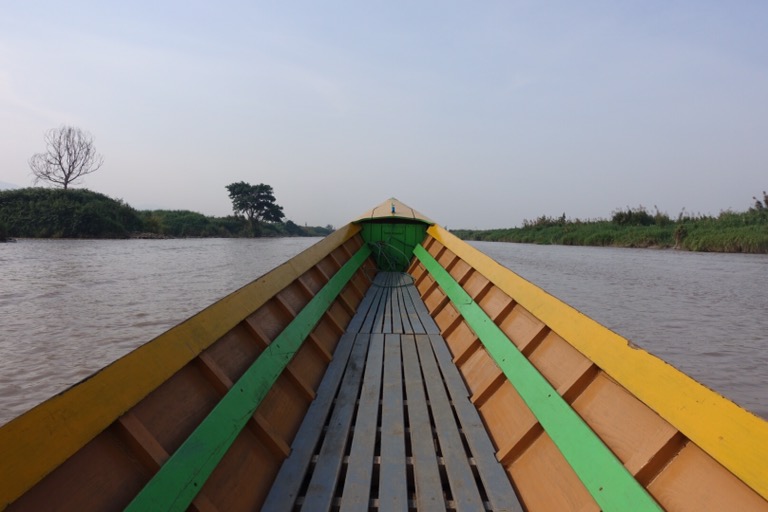
The first 20 minutes or so of the ride were through a canal/river of sorts that led to the lake.
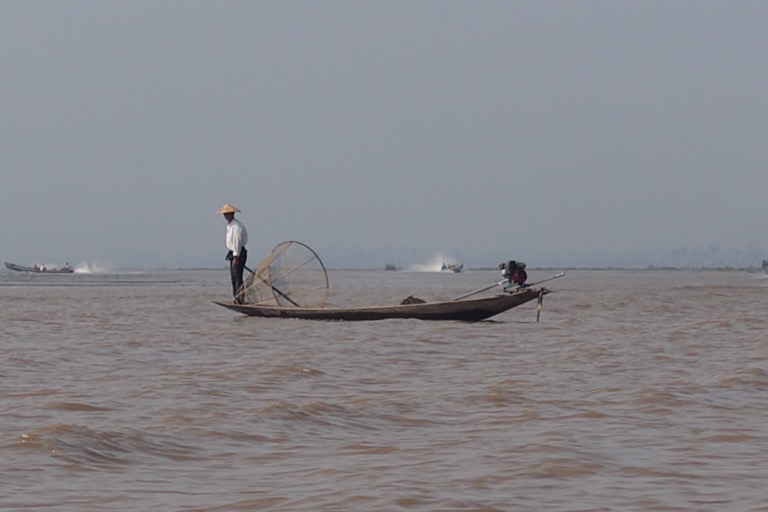
The fisherman on Inle Lake have a unique way of paddling the boat while standing up, using one leg to paddle to the next fishing spot.


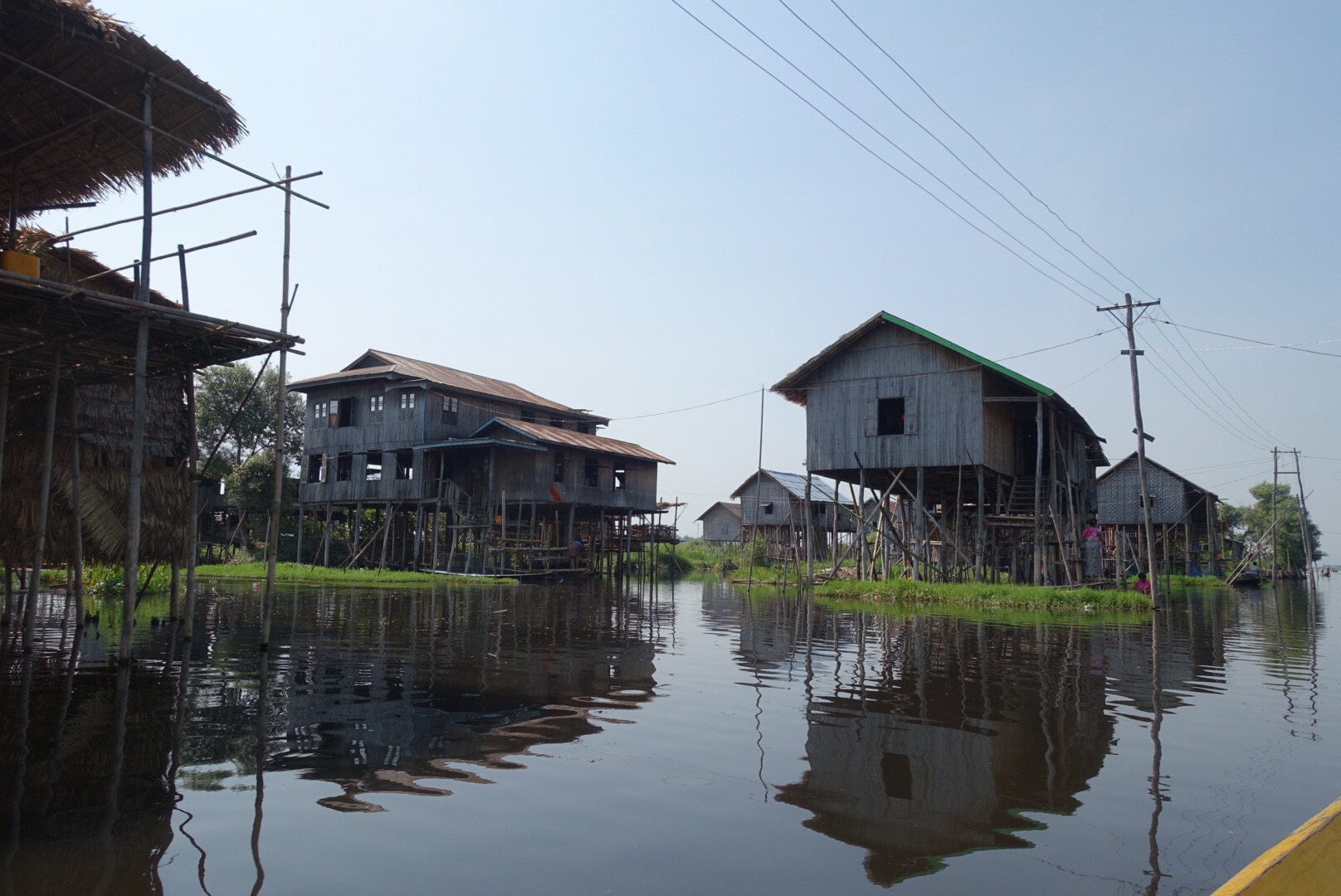
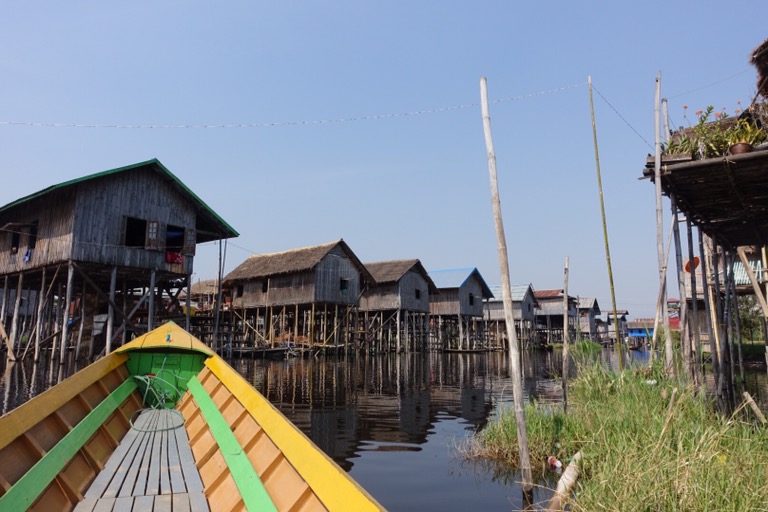
The first village we stopped at was quite small and spread out, but it was interesting to see the houses built on stilts and the floating gardens made of bamboo and seaweed, used to grow veggies.

The boat men collect seaweed from the bottom of the lake for the gardens.

It takes many villagers to make the garden grow.


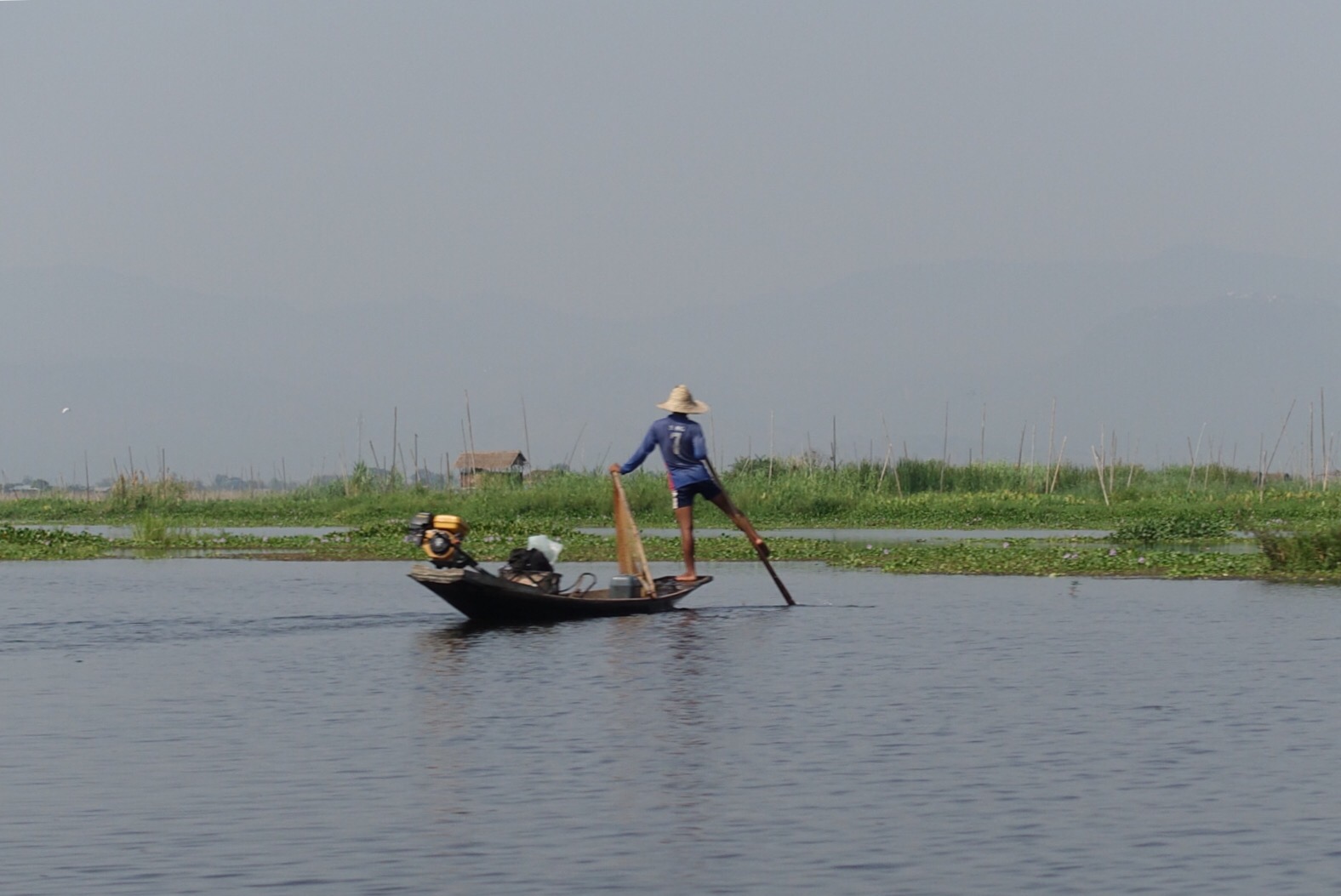
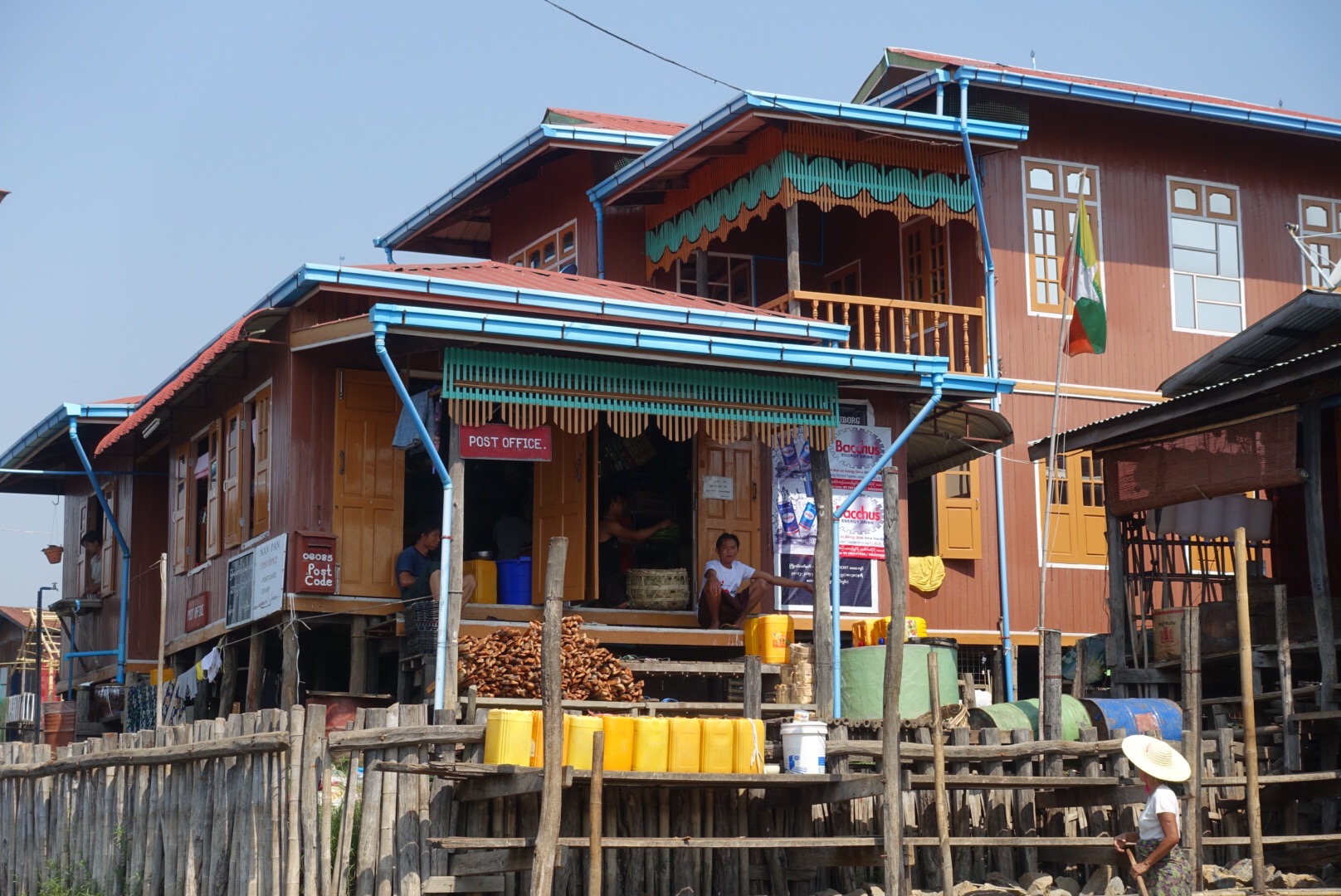
The next village we passed was situated in a really shallow part of the lake. Since it is towards the end of the hot season, and the rainy season is around the corner, the lake water level was quite low.

Then we started getting into the beginnings of a larger village.

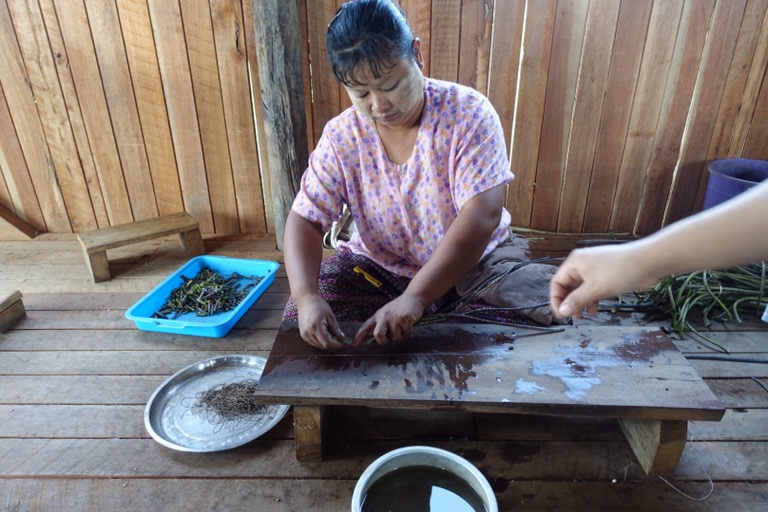
This is where the real tourist stuff stated for us. The first stop was at a fabric weaving center. This woman is pulling fiber out of lotus roots to use for making scarves. I had no idea that lotus could be used to make fiber! Quite expensive fiber at that. A scarf made with lotus fiber was at least $220! At this shack shop in Myanmar! I also wonder if it would have held up in a different environment than Inle Lake; the fibers felt squeaky/almost wet in the finished scarf so I wonder if it would have dried out and crumbled over time.

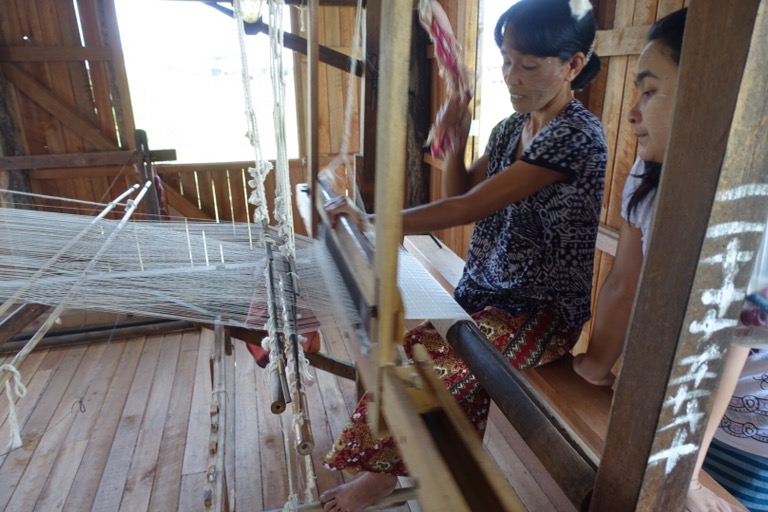
They also tried to tell us they make all of the fabric they sell in their rather large shop, with only one woman working the loom.. Can’t imagine that would sustain their tourist shop.
Next we were taken to a boat making and cigar rolling shop.

Then a pagoda on the lake, with an awesome market where we bought longhis (traditional skirts worn by both men and women).


The pagoda would only let men near the sacred rocks, which men are putting gold leaf onto. So Thom took a pic for me.

Next we went to a silversmith, where somehow this simple set up miraculously makes a whole shop full of silver wares that are sold to tourists daily! Somehow I doubt the truth in that, as no one was making anything until a big boat full of tourists showed up..

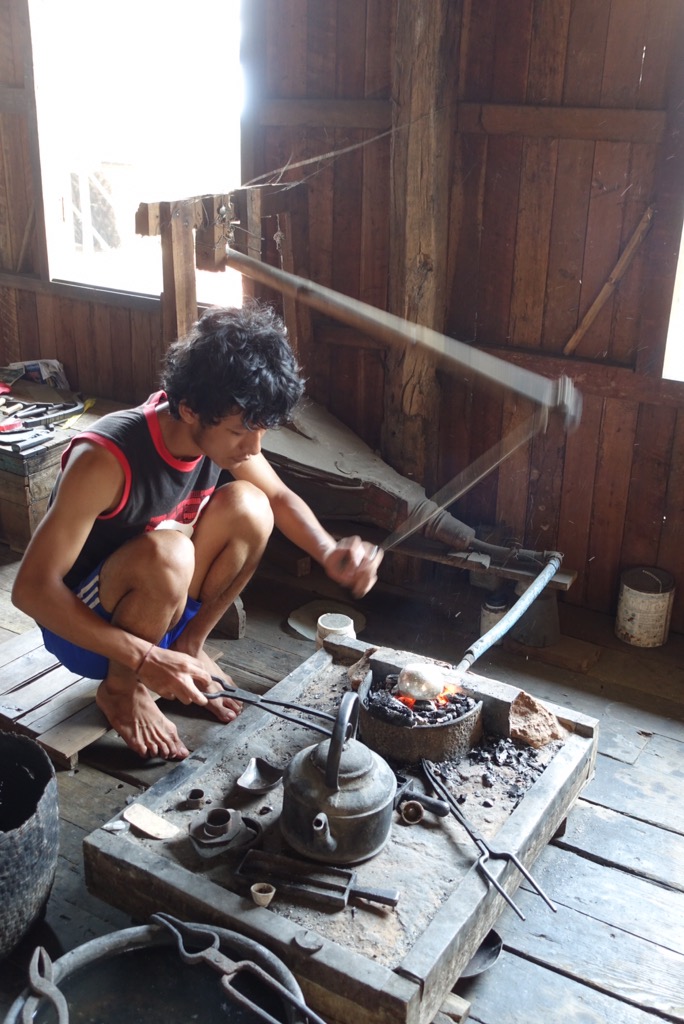
A lot of the lake is actually really shallow right now.

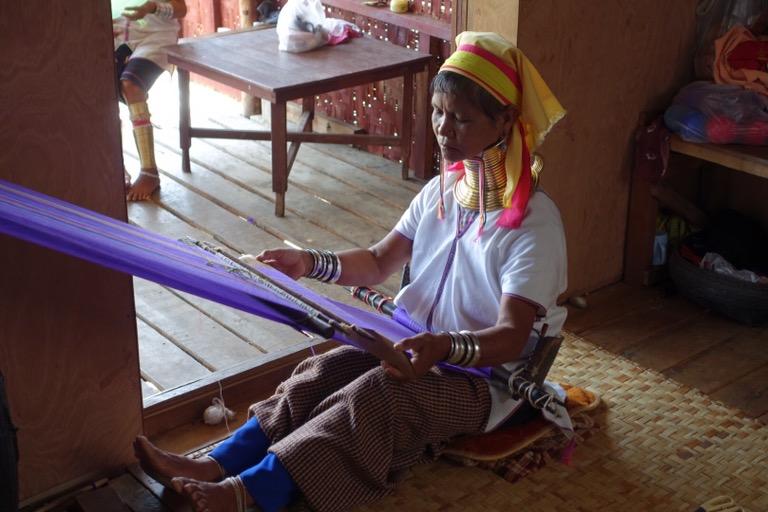
Another tourist stop, the long neck ladies. We felt strange being around these women as it seems like they are just putting on a show for the tourists to get people into their shop. I have to wonder how traditional this practice really is.

The last stop was the jumping cat monetary, where apparently the monks train cats to jump. But we did not see any cats, jumping or otherwise. We did see a nice view out of the back of the monestary.
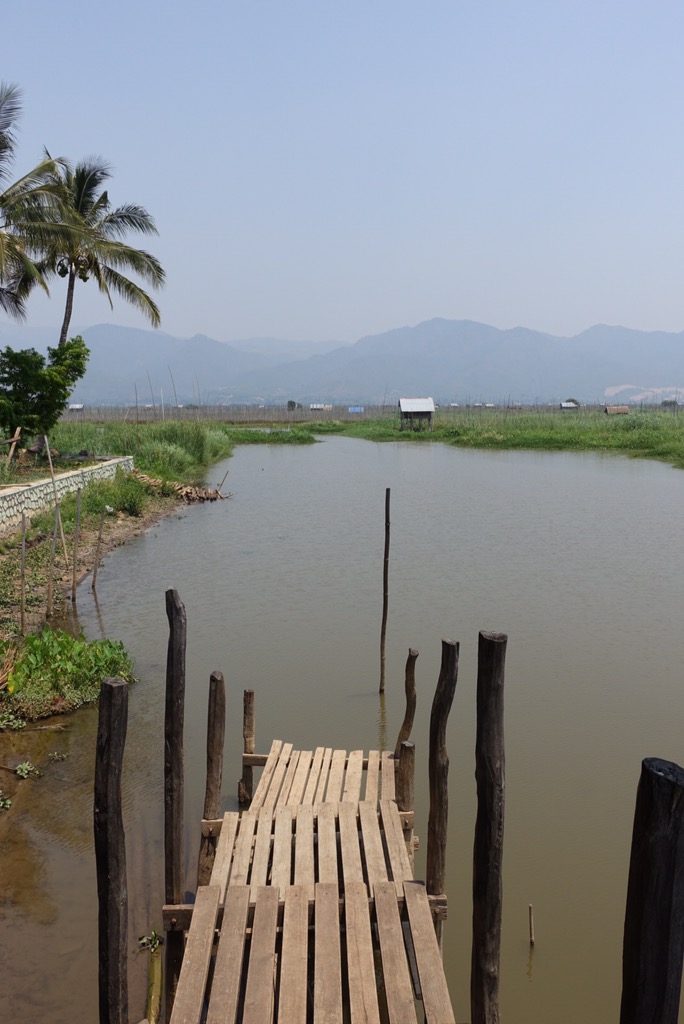

Growing some sort of gourds (?) on the lake.
After the lake tour we had an incredibly hot walk back to the hotel as it ended in the middle of the day and our tour guide just dropped us at the dock and said “getting out now”, so we had to find the hotel in the heat on our own. Not very fun.
We ended up staying in Nyaung Shwe for 3 more nights, but Thom got fairly sick with a fever and his neck was bugging him (so much wobbly transportation!) so we took it pretty easy the next few days. We did manage to bicycle out to the winery outside of Nyaung Shwe, yes a winery in Myanmar! The views were lovely but the wine was shit. Still nice to go, the tasting was cheap at 3000 kyat each (around $2.50) and the late harvest wine was reasonable enough to buy a glass of to drink while watching the sunset. We ran into a girl we volunteered with at CPOC and chatted with her and her friend for a bit before heading off to find some dinner.


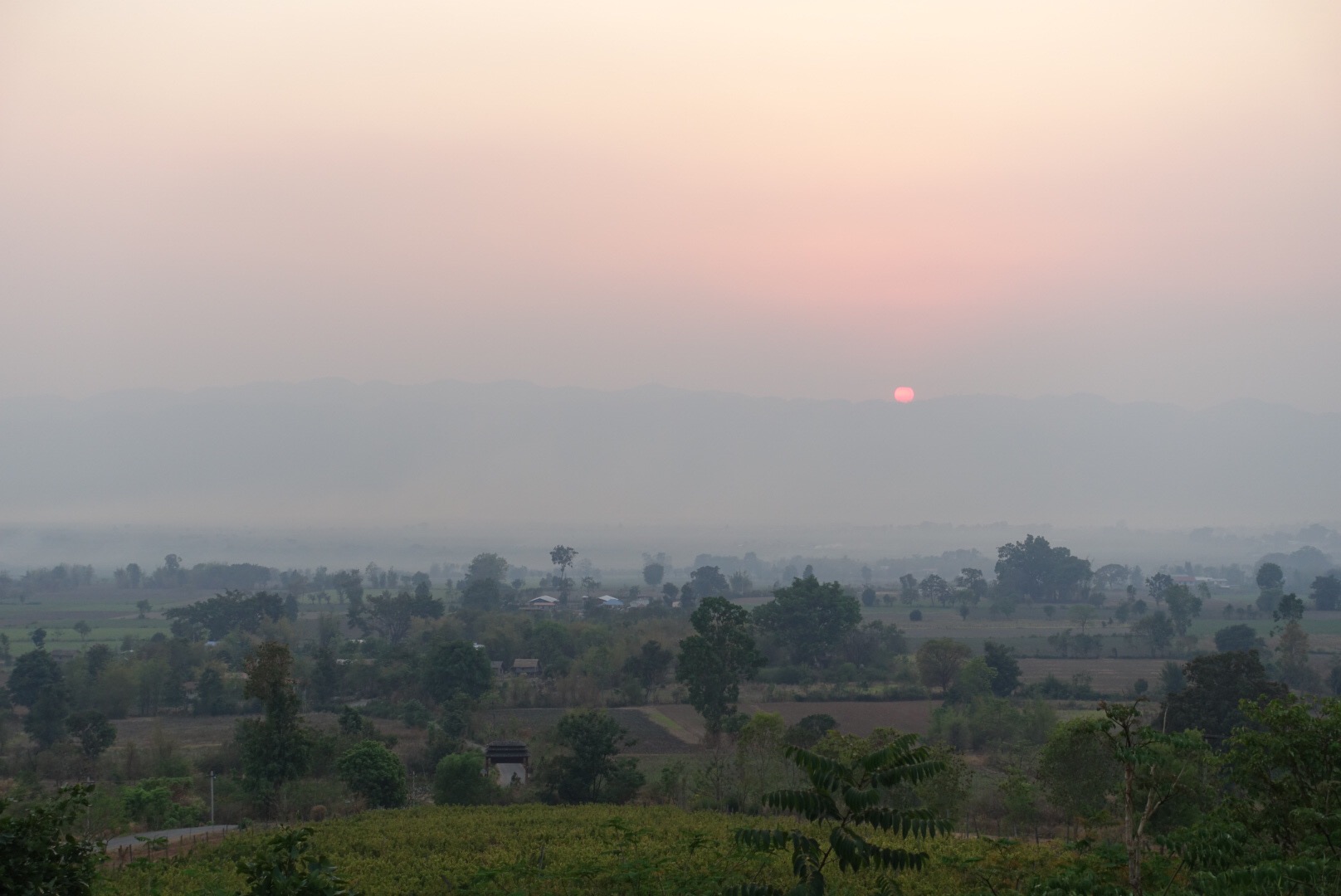
The next day we checked out of the lovely Pyae Yar hotel and ate at a French/Shan fusion restaurant in town while we waited for our night bus to Yangon. Before getting off the bus we ran into another couple heading to Hpa An, our next destination, and they told us about an easier way to go – getting off in Bago, before Yangon, and catching a bus there instead of trying to navigate the sprawling, busy, awful Aung Mingalar bus terminal outside of Yangon. We followed their tips and them to Hpa An, which will have to wait until the next post!
 fromkatietoyou