After realizing that Cambodia was significantly more expensive than we initially expected, we decided to look harder into finding a volunteer site to work at for awhile. I carefully read through the hosts on workaway.info for awhile before I remembered a message that a Cambodian host sent me months ago, right after I created our workaway profile. It was the only message I have ever received from a host (usually the volunteer contacts the hosts, or at least that’s what I’ve seen so far) and I wasn’t sure what to think of that so I had nearly ignored it forever. I am so glad I went back to find that message.
It was from Mr. Kim, a Cambodian man asking for volunteers to help at his center, the Center for Poor and Orphaned Children or CPOC. He needed help with teaching English to the children, building and caring for the garden, and setting up workshops to teach new skills to the children. We contacted him and quickly made plans to head out to his center the next day.
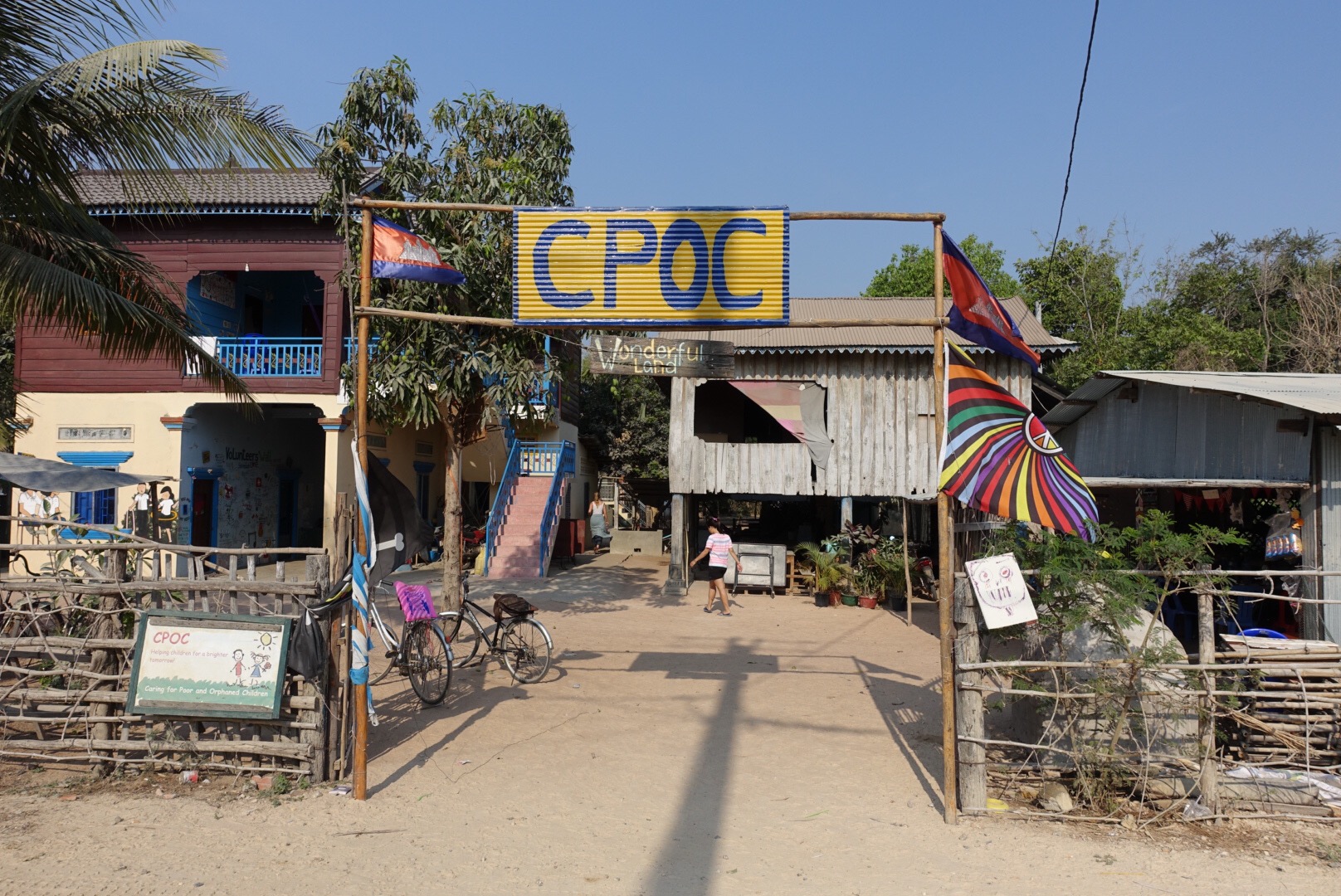
Mr Kim arranged for a tuk tuk to pick us up at our hotel, and take us to a market in Phnom Penh where we could catch a minivan to take us a few hours south toward the village where CPOC is located. The ride took much longer than we anticipated, and was super hot – it was midday, there was no a/c, and we were crammed into a minivan with about 20 other people. We thought the minivan was going to take us right to CPOC, so we were surprised when we were ushered onto motorbikes for a 6km ride to the village on dusty dirt roads. We were so glad when we eventually made it to CPOC Wonderful Land, even though it was around 1pm – the hottest part of the day.
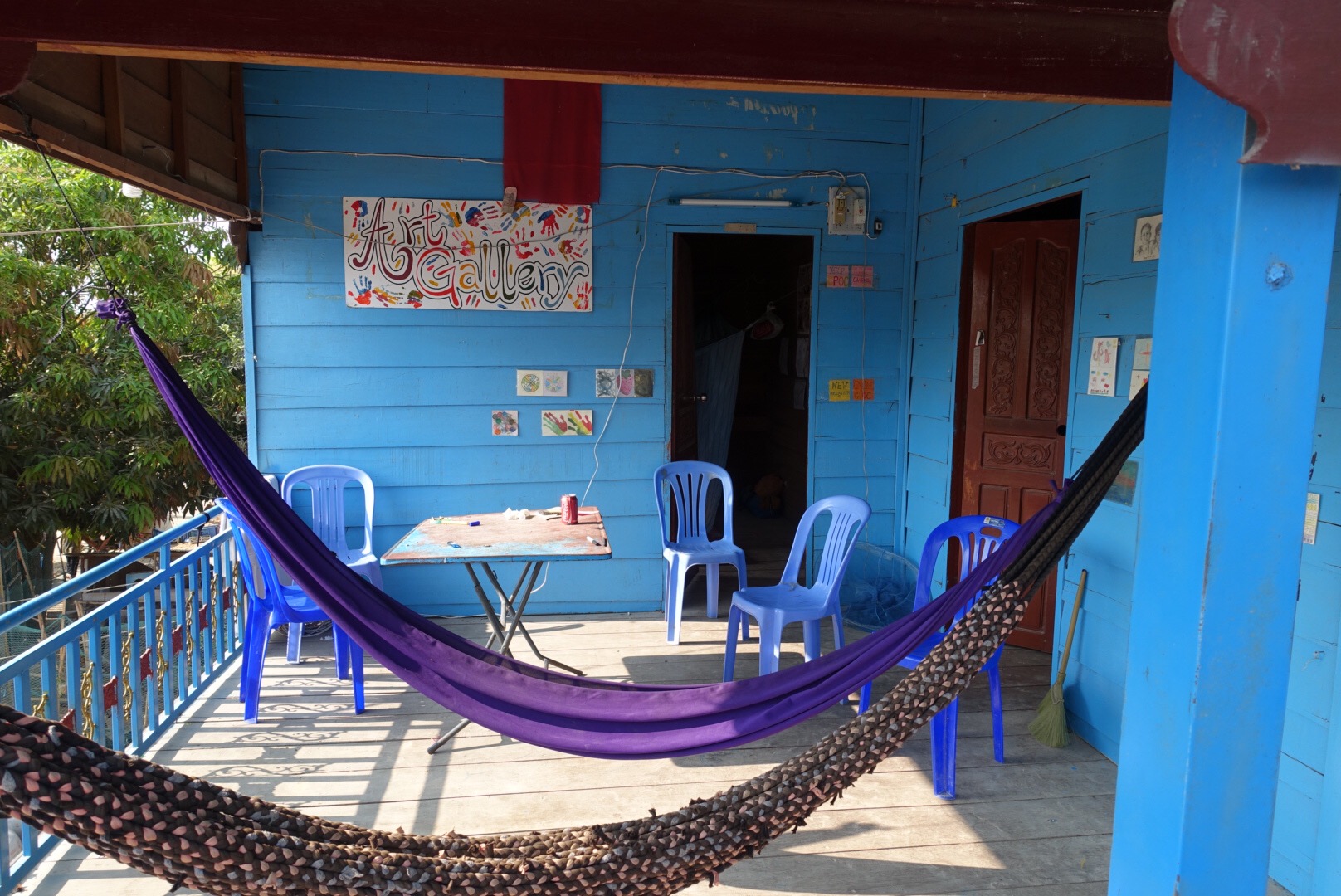
Our first day we spent some time getting to know the other volunteers and figuring out how things worked at CPOC. There were about a dozen other volunteers when we arrived, and included a wide variety of open minded people who are willing to spend anywhere from a few days to a few months helping out. Most people spend a week or two volunteering as part of a longer trip, similar to us, although there were a couple of longer term volunteers as well. Here are some pics of our accommodations:


Squat toilet and bucket shower area.

Kitchen

Water source used for showers/cleaning dishes, near the chicken houses.. and a local dog or two can occasionally be found swimming in it 

The neighbor’s shop


School area where English classes are held under the neighbor’s house

The living conditions definitely took some time for us to get used to. There was clean bottled drinking water that the center bought from town, but the rest of the water was a bit terrifying to us as healthcare providers – an open water pit in hot rural Cambodia seems like it would be the perfect breeding ground for terrifying tropical microbes. But this is how Cambodians live; the center is lucky to have a water reservoir like this for holding water through most of the dry season as some families do not even have this. The children are completely used to using water like this for brushing their teeth and washing their faces, and consider it clean enough to make rice with. Since we were only staying for a week we avoided the pit water as much as possible, though sometimes it was unavoidable. We managed not to get too sick in the process.
For our stay we paid $3/person/day to cover our food expenses for lunch and dinner. Both meals usually consisted of rice and some sort of vegetables, and occasionally small bits of meat. Volunteers often helped cook, but the children were basically in charge of cooking unless a volunteer was teaching a new technique. Breakfast was purchased at a shop on the property that is run by the neighbor, and sometimes the children help cook for breakfast too. We had lovely iced coffees every morning, and breakfast consisted of instant noodles fried with chili sauce and morning glory, with a fried egg on top. It was pretty tasty!
It was amazing to see some of the girls, between maybe 8 to 14 years old, easily cooking meals for a crowd of 20 or more kids and volunteers. Many of the kids living at the orphanage were fairly self-regulating – they wash their own clothes by hand, ride their bikes to school on their own, and are generally well behaved, aside from a few rowdy boys who seem to skip school when they feel like it. There is not a ton of oversight of the children, as the owner of CPOC is trying to build more properties, bring in volunteers and work on donations, and a lot of volunteers are only there for the short term, like us, so the kids (especially the boys) generally do not take direction from the volunteers.
It was hard to figure out our role with the children since we were there for such a short time. We did not want to try to control them or become central to their lives for a week and just leave, but we also felt like they needed someone to tell them what to do from time to time, especially in the case of the young preteen/teenage boys. Adding their backgrounds into our perspective seemed to complicate our role further. Many of the children staying at CPOC were there because their parents couldn’t take care of them. Some kids are there temporarily while their parents get back on their feet, while others are there more permanently. When we arrived, 3 new boys had recently moved in a few days before. Mr Kim had gotten word that their parents were unable to feed them and were trying to find someone to sell the kids to – a concept that is very difficult for us to understand as westerners. The rumor was that they were to be sold to a mining company, where they would be fed and put to work in some sort of mine either breaking up rocks or digging for some sort of precious materials. Once Mr Kim heard about this, he offered to take the children into the orphanage until the parents can get their financial situation straightened out.
All of the children have a terrible story like this. Two of the kids were living in a house that barely had a roof, that flooded terribly during the rainy season. Another two had a single mother with AIDS who developed AIDS-induced psychosis, who could no longer take care of the kids. Another pair had their mother drop them off and say she was their aunt, who can’t take care of them any longer, and has never come back to visit them since. The rest have similarly difficult backgrounds. These kids were basically independent even before they were brought to CPOC, and having some random foreigners tell them what to do does not really go over very well. Considering their backgrounds, and comparing them to some American children who have their hands held for years and are still brats, these kids don’t seem to be doing so bad.
Mr Kim himself has a pretty difficult background. His mother was pregnant with him during the Khmer Rouge, and was only allowed to eat 2 spoonfuls of rice per day during her pregnancy. As you can imagine, this is not healthy for a growing fetus – he was born with disabilities and is unable to use his legs, but he is very lucky to have a clear, working mind. After the fall of the Khmer Rouge, his father took the gold that his fairly well-off family had hidden before evacuation and took off with another woman, leaving his mother alone to raise the children with no money. His mother got very sick and passed away while he was very young. His older sister and grandmother tried to do what they could to survive, but his grandmother was too old to work and his sister was still quite young; his sister tried to sell whatever she could gather from nature, such as fruits that no one could pick from the tops of trees, but they barely got by.
Mr Kim’s disability forced him to walk on his hands, and he had to travel over 3km to school each day. Not only did the children make fun of him, but the travel to school was incredibly difficult on hands, as you can imagine. He said in the hot/dry season it wasn’t that bad because he would only burn his hands getting to school, but in the rainy season, the sewers would overflow into the streets and he would have to walk on his hands through raw sewage to get to school and then his teachers would not let him into the classroom because he smelled so bad. He still went and sat outside of the classroom because his desire to learn was so strong. To make matters even worse, when he got older, the classroom was moved upstairs. He yearned for his parents to help him through these challenging times, but his father did not come back when he was needed and his mother had passed away. He worked hard through continuous challenges his entire life, and eventually got a job with an NGO that helped people with disabilities, which started his career in NGO/social work. He is an amazing role model and has overcome an unfair number of hurdles in order to create a better environment for children who are living in poverty, and we feel privlidged to have met him and heard his story.
The day to day life at CPOC got considerably easier as the days went on. The mornings often started early, because the children woke up very early to go to school at 6am and also because we wanted to get the hardest gardening work done before the heat of the day set in. The afternoons were hot. Very hot. Like 100F/37C during the day, maybe hotter in the sun. Eating lunch was kind of difficult for us because we were so hot that we didn’t have much of an appetite, despite working hard on the garden in the morning most days.
Since our very white bodies are made for colder weather, we spent the afternoons relaxing/napping/trying to move around as little as possible. Even then we were sweating constantly, and it was a challenge to drink enough water to stay hydrated. We did find some brief relief from the heat when we would go across the street to another small shop owned by a neighbor for “ice cream”, which turned out to be crushed ice with jelly or chia seeds, banana flavoring, and maybe a little sweetened condensed milk. They had a nice table under some flowering bougainvillea that gave us some shade to eat our ice cream. The evenings brought bucket showers to cool off, dinner with the kids and other volunteers, and usually some time hanging out and drinking beers with the volunteers until we got tired enough for bed.

 Some of our volunteering time was spent building up/watering the garden at another property nearby, Dreamland, about a 10 minute walk away from our home base. This property is to be another home for children, and also home to one of the more controversial people Mr Kim is helping. The father of the family is an alcoholic who lost all of the family’s money and nearly their house to alcohol and gambling. The mother was working at a factory trying to make money to keep the house but it was just not enough. Mr Kim is trying to help them get back on their feet and make sure the children are fed, but the father continues drinking, which is clearly evident to the volunteers who are trying to help continue the progress on this new property. We were doing some work building a fence and cementing fence posts in place, and nearly every day he would try to correct our work or force it to be done a different way, despite us receiving direction to do it a certain way. Many of the volunteers would question why CPOC should help someone that is clearly not willing to change yet, but Mr Kim wants to help as many people as possible, and even alcoholics, and especially their innocent children, need help.
Watering the garden was a difficult task. At home, we take hoses and running water for granted, but here in the Cambodian countryside it takes a lot more work to do the watering. We had to pull buckets of water out of a maybe 30 foot deep well, fill giant watering cans with the water, then carry these cans all over the garden to water the plants. It took 4 people about an hour and a half to do this task daily!
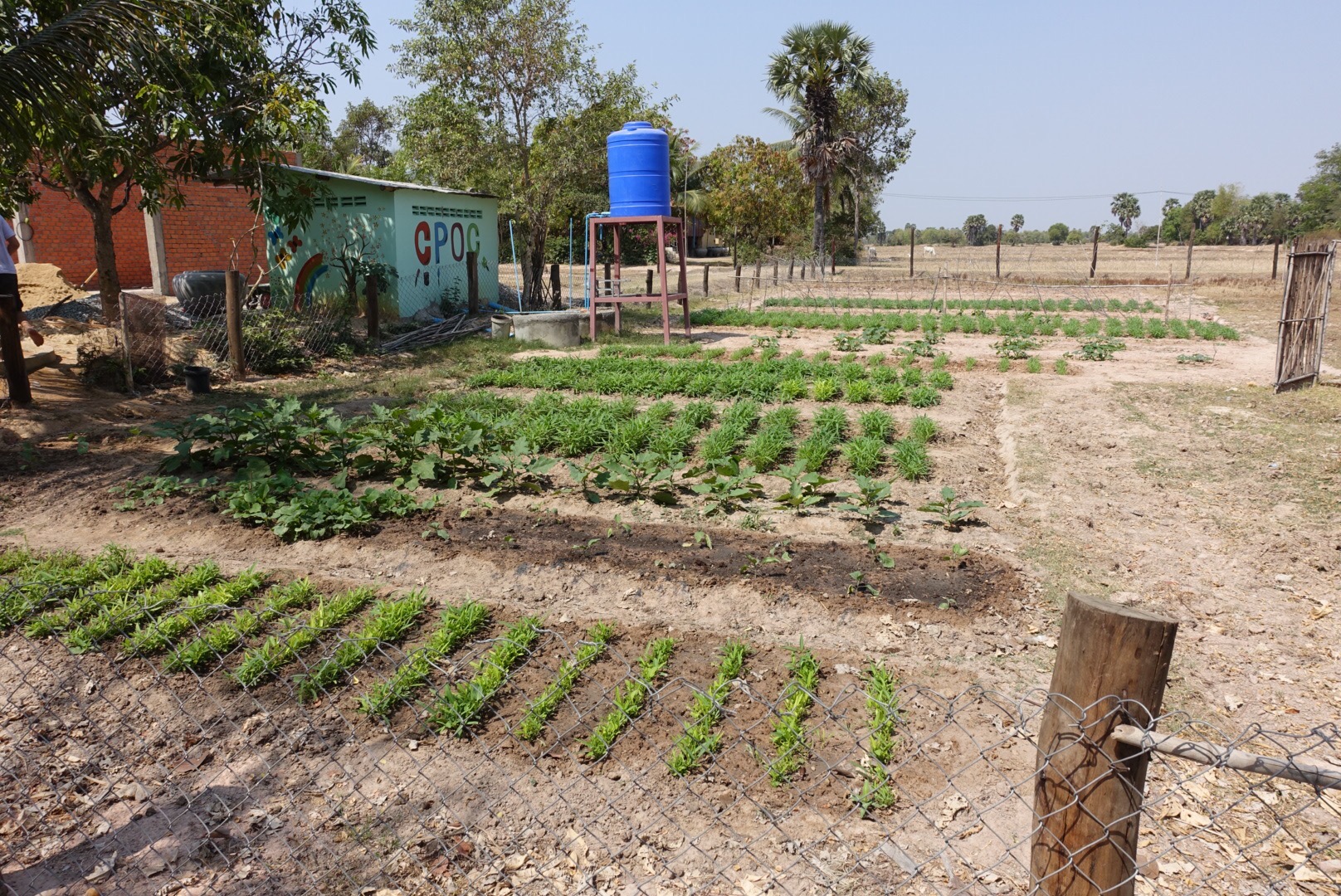


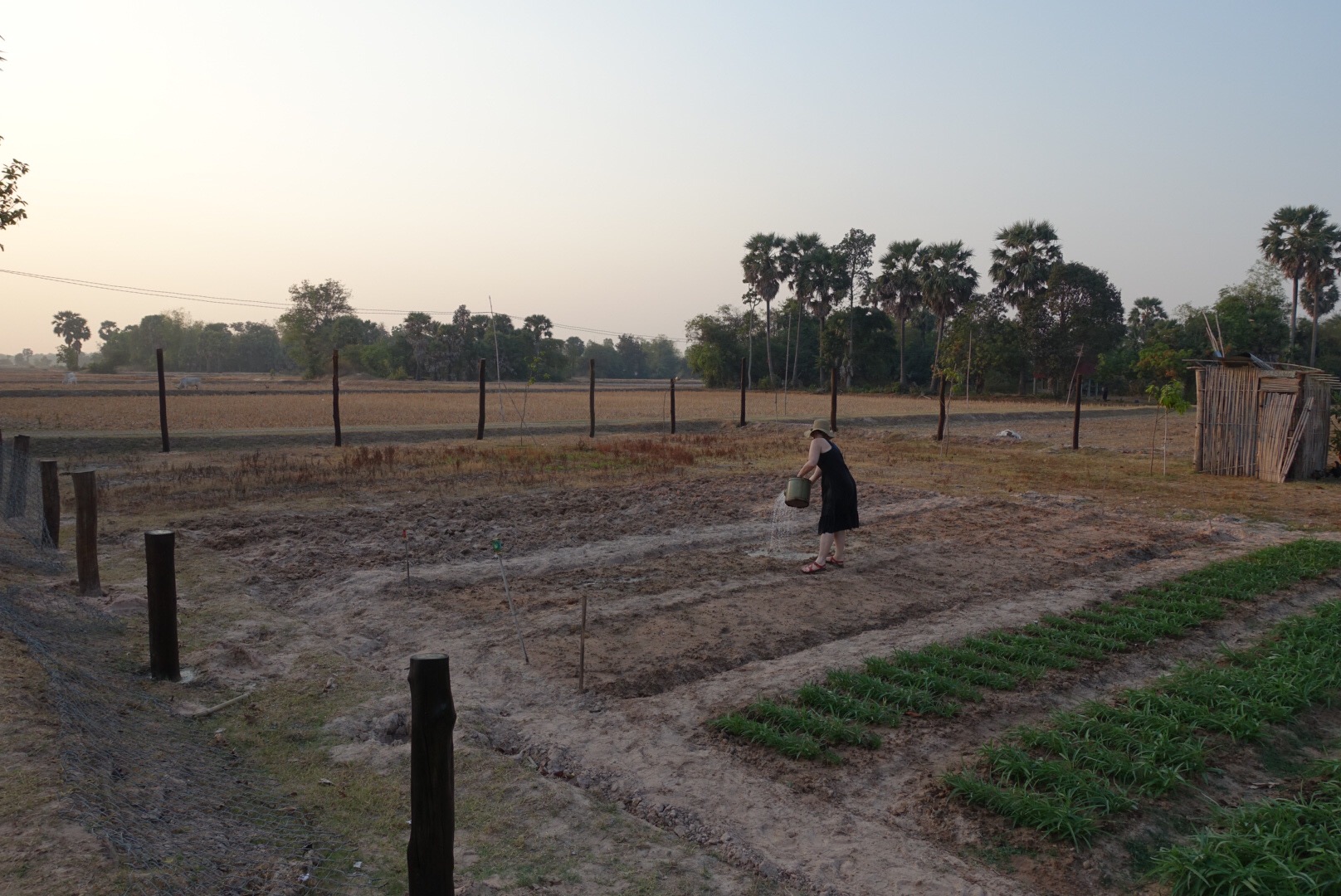
(Borrowed these two from Bryan)


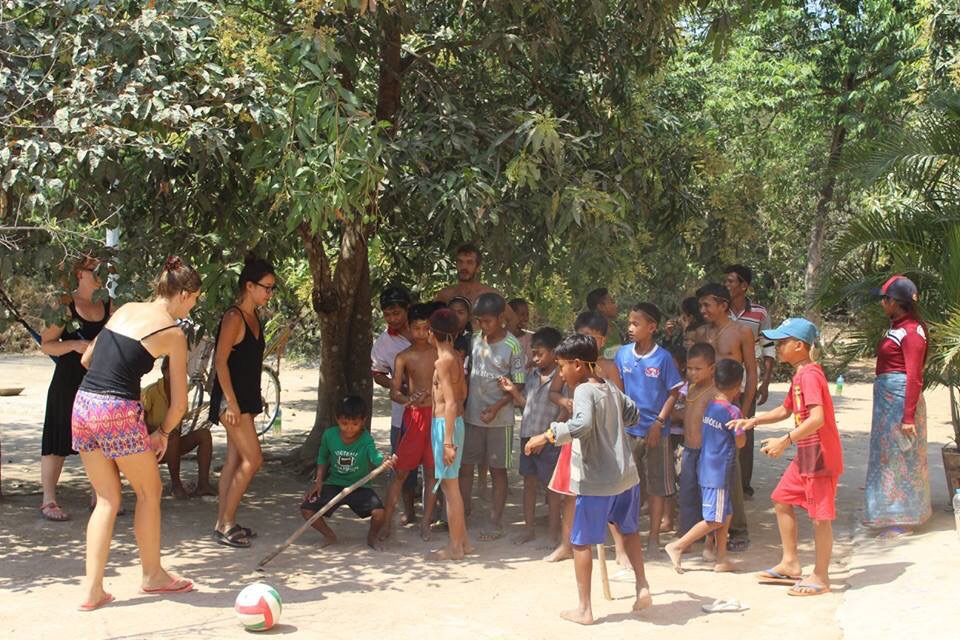
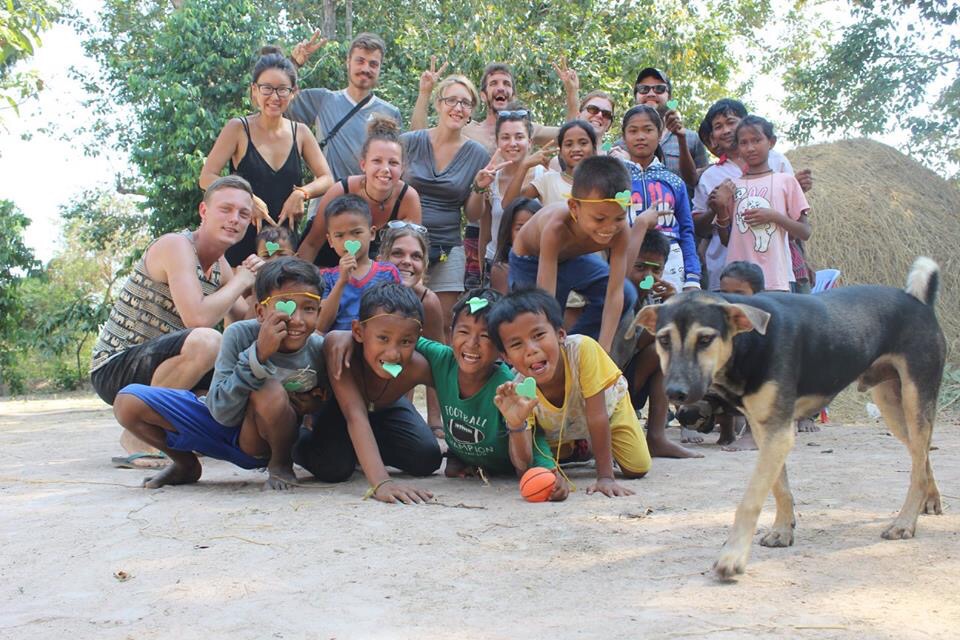
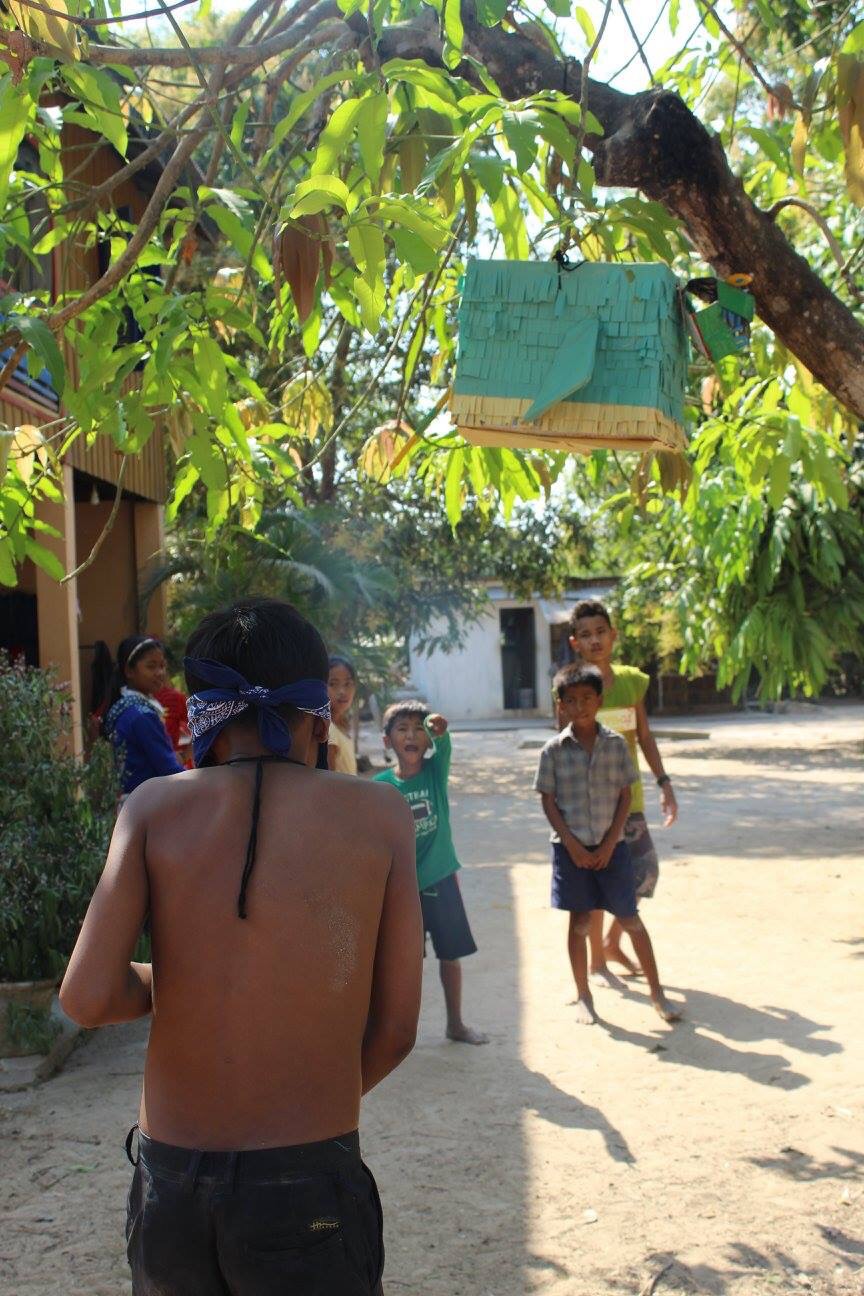
We also organized a few events for the children. One day we had a small Olympics, with two teams that competed in a few games: a relay race, a modified football game, a treasure hunt, and a few other games. We even made medals for the winning team and had a piñata at the end! It was a lot of fun and the kids had such a great time. I was the scorekeeper and got to present the winning team with their medals 🙂 Since I was busy keeping score I couldn’t take pictures, so I stole a few pics from 2 other volunteers, Dude from Holland and Bryan from Indonesia:





One day, Mr Kim came to Dreamland with some of the volunteers from another property, Happyland, and told us all his story and background. He also had some of the kids say their name, how long they have lived there, and what they want to be when they grow up. One of the girls said she wanted to be a doctor, and since Thom had bandaged up many feet from kids stepping on sharp objects without shoes on, we decided to have a first aid workshop. We also wanted to clean out the medicine cabinet in Mr Kim’s office, because many volunteers leave their first aid materials and medications behind thinking they are helping with a donation, but then CPOC ended up with a ton of supplies and medications they don’t have a clue how to use, so we wanted to help sort it out.
(Thom cleaning a volunteer’s wound)
We taught a few of the girls and volunteers how to clean a wound properly. We drew a red cut on my foot and we showed them how to put on gloves and not touch another person’s blood, how to clean a wound, and how to make an appropriately-sized bandage out of gauze and tape. The girls picked up on it so quickly, and we were so glad to teach them something incredibly useful! I showed the girl who wants to be a doctor what each of the first aid supplies is for, and she found a small little dollar store kit that she wanted to carry around to use. I had to take some time away to fight off the boys who kept stealing bandaids, but when I looked back on her she was putting all the right supplies in her little box – even the gloves 😀 I was so proud! Even if she changes her mind and doesn’t want to be a doctor next week, knowing how to protect yourself when dealing with another person’s blood is incredibly valuable information that may not have not been taught to them before. Thom and I were so glad to find a way to share our knowledge with the children, even if only a few were willing to listen.
Our week at CPOC quickly came to a close, and after saying our goodbyes we headed off on motorbikes to begin the reverse journey back to Phnom Penh and spend a few days relaxing in an air conditioned hotel room 🙂 We learned more in a week than we ever thought possible, and I am so glad I went back and read that message from Mr Kim!
 fromkatietoyou